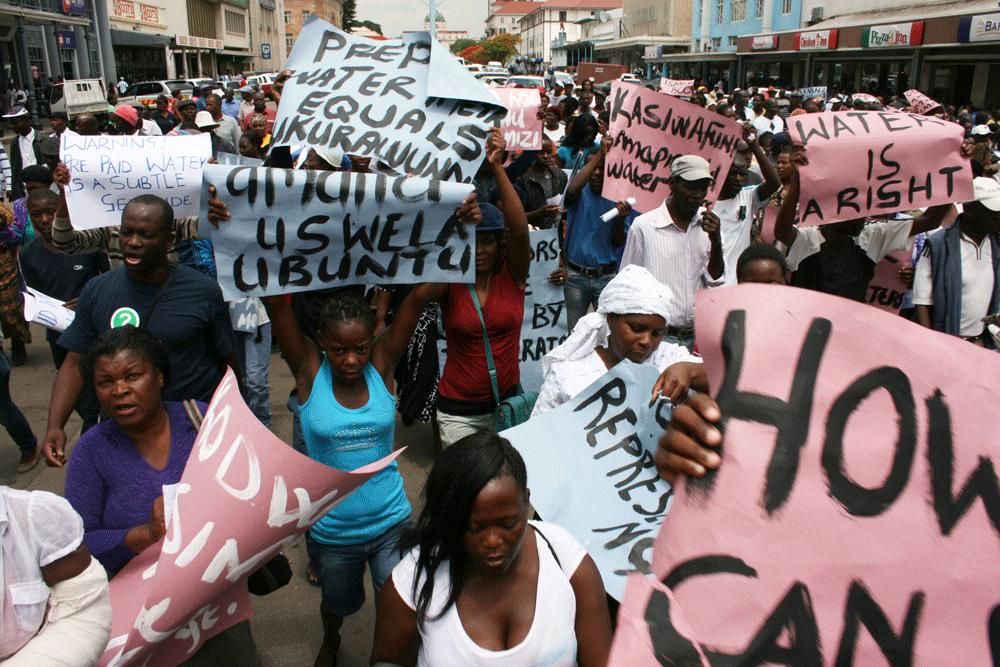

Proposed prepaid water meters have seen many women in marginalized communities engaging in demonstrations fearing the outbreak of diseases should the plan be implemented.
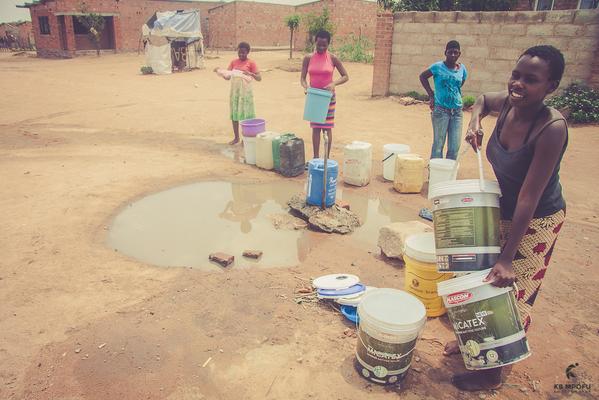
In Zimbabwe’s marginalized communities, women are responsible for fetching and finding water for their families.
All the water they need for drinking, washing and cooking, they walk long distances, carry heavy burdens, wait for long hours to get a chance to fetch water.
Most of the times the water sources are not protected thus the water is contaminated, in this instance they face an impossible choice of having no water at all or having contaminated water
Rutendo Chihota an old woman from Tafara Mabvuku said, ‘as a citizen I am totally opposed to water meters, there has to be availability of water first perhaps then will we start to talk about this project of installing water meters’.
Section 77 of the New Constitution recognizes the right to safe, clean and portable water failure to guarantee this right demonstrates marginalization of the already poor.
‘There is no substitute for water, unlike electricity which can be substituted by wood, paraffin and gas, prepaid water will be an extra burden to bear, hygiene on poor house holds will be compromised as there wont be enough water to bath, cook and wash.’, said Tamarie Marufu an Epworth resident.
According to the World Health Organization and UNICEF Joint Monitoring Programme (JMP). (2014), Progress on Drinking Water and Sanitation, 2014 Update, it is estimated that women and and children spend 140 million hours each day collecting water.
Surveys from 45 developing countries show that women and children bear the primary responsibility for water collection in the vast majority of households (76%). This is time not spent working at an income-generating job, caring for family members, or attending school.
Women also complained about poor sanitation if the prepared water project is implemented, the often unspoken part of the water and sanitation crisis.
The sanitation crisis for women can be summed up on one word’ dignity’ the dual aspects of the water crisis- lack of water and sanitation- lock women in a cycle of poverty. They cannot attend schools they cannot earn an income.