
By Owen Dhliwayo
The Cyclone Idai disaster is a natural phenomenon, but its impact is not. Rather, the impact is determined by the circumstances of the communities in the context of poverty and social inequalities. The Cyclone Idai disaster took place in communities governed by power relations based on gender, and the impact also reflected these power relations. Thus, men and women experienced the disaster differently.
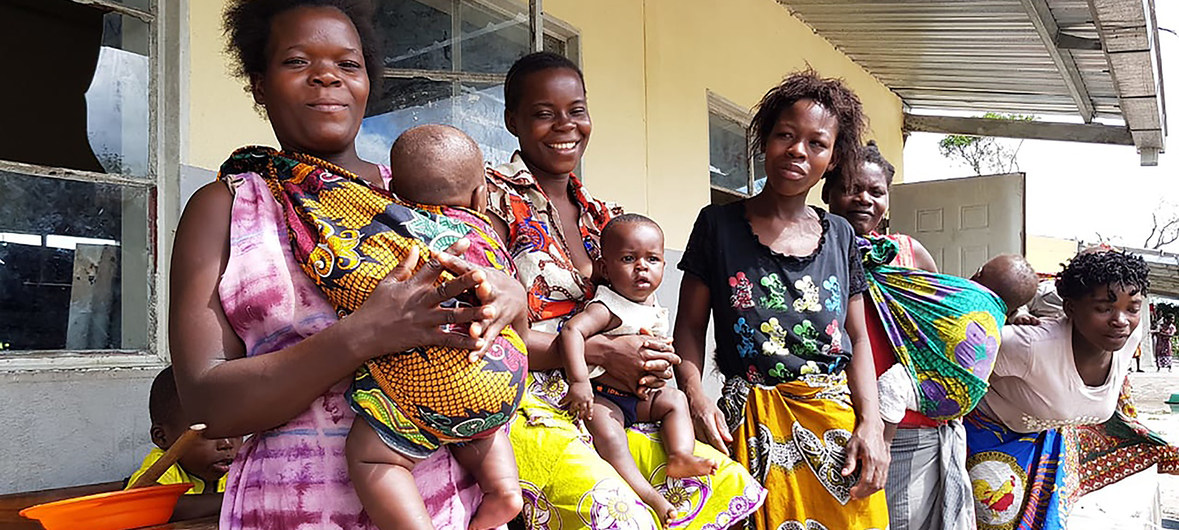
Chimanimani (147 789) and Chipinge (329 842) has a combined projected population of 477 631, and out of this projected figure, a total figure of 250 000 people was affected by Cyclone Idai and 130 000 are women. It is reported that 5 200 women are at risk of sexual violence. Lack of privacy and safe spaces at emergency shelters triggered the vulnerability of women to sexual abuse. Many Cyclone Idai victims are sheltering in schools, Churches and public buildings that expose women to sexual attack. Some of the women who spoke to PYD Gender and Advocacy Officer, expressed the feeling of insecurity at the shelters and exhibit fear of pervasive violence post Cyclone Idai.
Nearly 75 000 pregnant women were caught up in the Cyclone Idai trail of destruction and 1 in 10 women (7 500) are at risk of serious complications that will require skilled delivery care. However, the reported disruption of water and sanitation facilities by Cyclone Idai is likely to expose the pregnant women to opportunistic infections and possible outbreaks at the established health centres as well as referral health centres.
Vulnerability of women in both Chimanimani and Chipinge is within the context of the social vulnerability as well as psychological vulnerability. The feeling of powerlessness in the decision– making process and the feeling of insecurity invokes both social and psychological vulnerabilities of the affected women in the Cyclone Idai ravaged communities. Thus, women are at risk of falling into deeper poverty post Cyclone Idai, and this realization raises their social and psychological vulnerabilities.
Women vulnerability in both Chimanimani and Chipinge has been brought to the fore due to a combination of factors that include underperforming government institutions and lack political will. These two factors increased the disaster-related risks and vulnerabilities of the exposed women in Cyclone Idai ravaged areas. The cyclone phenomena interacted with our political structures in a way that magnified the risks and vulnerabilities of women in Chimanimani and Chipinge.
Underperforming government institutions in the two districts and lack of political will are the pre-existing vulnerabilities that largely contributed to the impact of Cyclone Idai on women. This resulted in high female mortality rate from the Cyclone Idai, and this is linked to a systematic socioeconomic, cultural and political marginalization before the onset of the disaster. It is reported that 52% of the people affected are women which translate to 130 000 women in both Chimanimani and Chipinge districts with 65 000 aged between 15 – 49 years.
The Cyclone Idai disaster exacerbated the confluence of social vulnerability of women along with inept government response to the disaster. Most women and young girls have lost everything.